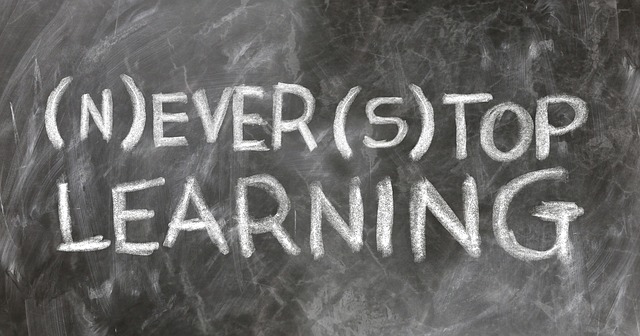
Congratulations!
If you were able to read that, then you are more literate as an adult in English than a sizeable chunk of the people living today.
That might sound ridiculous; you might even scoff.
But it is entirely correct.
Let me share with you my thoughts on adult learning theory.
 My father back in the 80s. A man that would not let his challenges with literacy hold him down (photo courtesy Michael Cole)
My Own Experience
As a child, we usually overlook things that we notice as adults.
Growing up in a working-class family, it never dawned on me that my dad had a literacy problem. After all, I knew that my Dad worked on aircraft at Mare Island In San Fransico, as a teenager. I knew he served several years in the United States Army in mortars and the Quartermasters.
Growing up I watched my Dad work on cars, trucks, and work in apartment maintenance, so I just assumed that he could read since in my mind he could do all these things.
Boy, was I ever wrong.
My Dad had a reading and writing problem. It wasn’t that he was stupid; after all, he could take apart almost any machine and fix it. He was knowledgeable about the world around him. My dad grasped concepts that others did not understand readily.
He just could not read above an elementary school level.
My dad grew up in a period that social promotion was a thing. Back in the 1960s, teachers would pass a student even if they did not grasp a concept so long as they were good kids.
So the sixties raged as my Dad grew up. As Kennedy committed us to advance our knowledge of science and math to win the moon race, my dad struggled to read. As a generation identified itself in music and art; in cultural changes and social changes, a young man in Vallejo California struggled to grasp the written word.
 In 1968 the United States Army had no interest in soldier literacy. They only ensured a soldier could master trained tasks, carry out orders effectively and quickly. (Defense Department photo)
The Army and Vietnam
Frustrated with his slow learning and plagued by such tragedies as the death of his father, he dropped out of school in April of 1968. Unfortunately, that made him eligible for the draft.
And Vietnam.
In 1968 the United States Army had no interest in soldier literacy, nor did they subscribe to any adult learning theory. They only ensured a soldier could master trained tasks, carry out orders effectively and quickly.
So my dad found himself as an infantryman in Vietnam in 1969.
Then after that, he saw places such as Korea and Germany.
The Army improved his vocabulary and literacy only enough to meet the needs of the service.
After getting married and having a son, he left the military for civilian life.
 Image by Ben Kerckx from Pixabay
Life in the 80s
Despite the commercials and public service ads about adult literacy in the 80s, there was not a lot of real effort given to fixing the problem. Adult learning theory was something that was given lip service to, but beyond photo ops and the such, there was little done.
So my dad, a person that could grasp technology and mechanics faster than many engineers, was quickly relegated to apartment maintenance.
After all, what hope did a high school drop out have to better himself?
He couldn’t go back to school. After all, he didn’t even have a High School Diploma or GED, so college was out. To earn a GED, he had to overcome his illiteracy.
For a man already working over sixty hours a week to support a family, finding the time was impossible.
Not that my Dad did not try. He was always going to the library and checking out technical manuals on vehicles, machinery, and items like that. He taught himself how to sight read guitar music.
Most of all he instilled a love of the written word into me. My sister and I had to have library cards. We went every other weekend to the library, and we had better check out a book.
He expected his children to achieve more in education.
A gift that I can never repay.
 Image by Free-Photos from Pixabay
The 90s and Beyond
However, my Dad did try hard as time went on to overcome his reading comprehension. Many of what he did, I will go into more depth further as he did try some pretty new tactics and tricks that are just now being embraced by the educational community.
The computer bug bit my dad in the early 1990s. Compared to today’s computers, the desktops of that time were not as advanced as my smartphone.
They required programming in BASIC or FORTRAN, and if you messed up on the syntax or grammar of a program, may God have mercy on your soul. The computer surely would not. By doing that, he slowly built up his reading skills in English.
My dad worked on his own adult learning theory, and in 2004 finally earned his GED.
Sad to say, that my Dad was diagnosed with Lymphoma in 2002 and passed away in 2007.
I dedicate this guide to his memory.
 Image by Wokandapix from Pixabay
A quick word of advice
When we say the words, comprehensive adult literacy, what many people think and what it means varies greatly. It does not necessarily mean that the adult cannot read at all.
It might be in my Dad’s case, that the adult does not have the vocabulary to have a sufficient command of the English language; perhaps it might be possible that the adult in question has proficiency problems with technical jargon.
It is entirely possible that the learn how to read for adults is needed because the adult has only rudimentary or even no grasp of the English language.
I cannot stress how important it is to understand one thing, not every adult literacy case is the same. Nor should consider a one size fits all approach to adult continuing education.
Adult learning theory should never center around generalities for specific cases. When dealing with adult literacy and adult education, do what is right for the learner.
Every person will be different so, do what works for the idea to learn how to read for adults.
Now on to the fun stuff!
 Image by Free-Photos from Pixabay
Adult Learning Theory
Adult learning theory is how it sounds; ideas that professionals suggest work best in helping guiding educators and students to learn how to read for adults. Adult literacy and adult education nearly always vary depending on what method the educator follows.
Some of the more prominent adult learning theory, are Andragogy, Self-Directed Learning, and Transformational Learning. Professionals will use one or all of these adult literacy tools.
But I suppose right now you are wondering what each one of those is.
I know I would.
Andragogy
There are two types of learning applications pedagogy and andragogy. Pedagogy is the science of teaching children; while andragogy focuses mainly on adult learners. Andragogy in the adult learning theory for educating and aiding to help the student learn how to read for adults, suggest the following about the learner.
- The learner comes self-motivated for adult education through internal and not external forces. In a nutshell, the adult wants to learn.
- The problem-centered student of adult education wants to apply their newfound knowledge immediately
- They have a wealth of knowledge from life experiences to help in their adult education
- New positions and social roles spur the learner to adult continuing education to expand vocabulary.
- The adult literacy mostly moves from dependency on the educator to a form of self-study and self-directed adult education.
Adults, unlike children, need to know why they are they are learning a particular task. By giving the adult learner a reason why they are learning a specific job for a reason, the desire for mastery increases.
Experts in the field of Andragogy suggests that the adult learner or instructor for the adult learner try some of the following to aid in adult literacy:
- Create a cooperative atmosphere for the learner
- Find out the specific interests and needs for achieving adult literacy. Simply put, what does the learner wish to accomplish.
- Work in a sequential manner. Do not skip around.
- Work with the learner to find out what works best. Once you find a strategy or material that the learner enjoys or learns the best, stick with it.
- Adjust the learning material and methods periodically as the learner advances to best fit the learner.
 Image by Gerd Altmann from Pixabay
Self-Directed Learning
The adult learning theory for the self-directed learner is one that sets the pace of their learning. They will tackle their vocabulary problems in a manner and speed that the adult finds comfortable. My Dad used this method to help him.
Nearly 70% of those trying to learn to read for adults fit in this category (Cross, 1981), with 90% of adult continuing education learners having done at least one self-directed lesson a year (Tough, 1971).
Now that you know the numbers, what is exactly involved with self-directed learning?
The experts describe it as a “process in which individuals take the initiative, without the help of others” in planning, carrying out, and evaluating their own learning experiences (Knowles, 1975).
In layman’s terms, this adult learning theory is the adult learner taking control of their studies and the pace of learning. By seeing and hearing English in everyday life, they increase their vocabulary.
The attractiveness of self-directed learning stems from the idea that the learning can learn at his or her own pace. Learners can incorporate the lessons into the ordinary day to day activities ranging from e-mail to shopping. It allows the learner to gain knowledge by doing. The learner sees the positive effects of their adult continuing education as it applies to their daily activities.
Here are some strategies for adult continuing education with self-directed learning:
- Decide on an objective after a self-assessment
- Pick a starting point for the objective;
- Match appropriate resources (books, articles, content
experts) and methods (Internet searches,
discussion groups, etc.) to the objective;
- Set learning goals, strategies, and evaluation criteria
- Decide on strategies for decision-making and self-evaluation
of work;
- Adopt positive attitudes and independence relative
to self-directed learning; and
- Constantly reflect on what the SDL learner is discovering.
The drawback to self-directed learning strategies sets on the level of literacy the learner has. The lower the level of literacy, the harder it may be for the learner to work in an independent environment. Without outside guidance, the low-level learner could easily find themselves frustrated and give up. Self-direction is a critical component of persistence in adult education, helping learners recognize how and when to engage in self-study when they find they must stop out of formal education (Brookfield 1985).
 Image by Perfecto_Capucine from Pixabay
Transformative learning
Transformative Learning is a rational process. As individuals reflect on and discuss their assumptions about the world, they often experience a shift in their frame of reference or worldview
For this to happen, individuals engaging in thoughtful discourse need to challenge each others’ assumptions and encourage group members to consider various perspectives. It is essential that participants engaging in friendly conversation have complete and accurate information about the topic for discussion, be free from bias, and meet in an environment of acceptance, empathy, and trust (Mezirow, 1997, 2000).
Transformative Learning is a rational process.
As individuals reflect on and discuss their assumptions about the world, they often experience a shift in their frame of reference or worldview. For this to happen, individuals
engaging in reflective discourse need to challenge each others’ assumptions and encourage group members to consider various perspectives.
It is essential that participants engaging in reflective discourse have complete and accurate information about the topic for discussion, be free from bias, and meet in an environment of acceptance, empathy, and trust (Mezirow, 1997, 2000). A criticism often leveled at Mezirow’s TL theory is that it does not account for the effect of the individual’s race, class, and gender, or the historical context in which the learning occurs (Corley, 2003; Sheared & Johnson-Bailey, 2010; Taylor, 1998; Cervero & Wilson, 2001). It has also been
criticized as hyper-rational, ignoring feelings, relationships, context and culture, and temporal aspects (Silver-Pacuilla, 2003).
Transformative Learning is the go-to adult learning theory in dealing with English as a Second Language. The argument goes that by immersing the student in an English speaking environment that causes their brain to change its learning patterns slowly ensuring that they think in English, so they speak English.
Now that we have a rough idea of what adult learning theory comprises of, we can start focusing on tools to improve adult literacy and to act as a guide to help learn how to read for adults
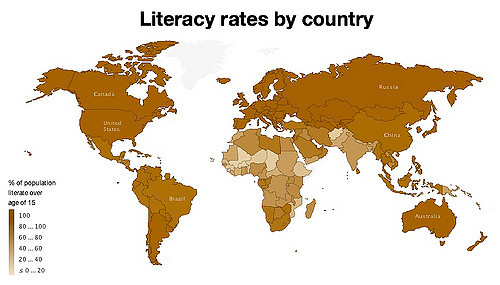 Nearly a Billion People worldwide cannot read. UN File Photo
Adult Literacy
Pick your poison.
You have a rough idea of the adult learning theory that can help; now the question remains as to how you will go about it.
So, pick your poison. What tactic works for you?
The answer depends.
On what?
Simple, that depends on the result desired. Does the learner not know how to read at all? Is the learner after improving their adult literacy, maybe trying to moving from a limited vocabulary to a larger one?
Or is the adult learner more after adult continuing education? Maybe having to expand their vocabulary in a particular field of study or profession? A new nurse wanting to grasp medical terms? An engineer that is trying to develop their knowledge of technical terms.
Depending on what the learner needs will determine some of the steps needed to improve adult literacy.
 Image by STIGMAMA from Pixabay
The Games People Play and a way to Learn How to Read for Adults
Do you want to play a game?
No seriously.
Do you want to play a game?
Ever wonder how come children understand how to work modern gadgets and toys faster than adults do? It’s effortless, playing games.
Think about it, when challenged to do something, especially in a competitive environment. Children use technology to play games, so they master the new information very quickly.
The adult learning theory does suggest that the lesson be enjoyable and captivating. Then why not let your competitive nature help to learn how to read for adults.
People are more likely to learn when they are not looking at it as learning. Having to sit down with a lesson can cause people to gloss over the experience, and even tune it out. When they see the experience as abstract and of no immediate value, they are not concentrating as much as needed to master the lesson.
At the opposite side of the spectrum, when the lesson excites the learner to master the subject.
Quite possibly the best path to adult literacy.
So play a game. Now I am not saying that you play any game. Play something that mostly challenges your vocabulary and spelling.
That mostly was my Dad’s way of learning. At one point he became obsessed with Wordsearch puzzles. Since this was before anyone knew about the internet, he was always buying the jumbo Wordsearch books and magazines.
He spent hours in the evenings just searching for words. As he saw new words that he had never seen before he would pull out a Webster’s Dictionary and look it up. He would then use that word for days to come. Without knowing it, he had happened upon his own adult learning theory.
Eventually, as his vocabulary improved, he started trying the more difficult crossword puzzles. So no matter what, my Dad was learning without the stress or boredom that a classroom brings so many learners.
Adult Education, Games, and Spell-Quiz
So how does Spell-Quiz fit into this?
If you noticed, there are two types of interactive learner tools at Spell-Quiz to strive for mastery.
For the near illiterate adult learner, I would suggest going through the modules from First Grade up to Adult. I would recommend that even if the learner finds themselves to be able to use words on higher levels to start off at the First Grade one.
Why do you ask?
For the simple fact that you never know where you might be lacking in a bit of knowledge. Perhaps some words are considered elementary level, that still throws you for a loop.
Me, I still struggle with words like, “answer,” “weird,” and “their.”
To this day, I find myself having to think about the spelling of those words, and will probably make the occasional mistake of writing them or typing those words. Ironically, when I did type the words above, I still spelled “weird,” with the “e” and the “i” in the wrong place.
For those of you on the go, there are plenty of apps you can download on your phone or tablet such as Word Crossy or your PC at Cool-Math
There are also some pretty fun spelling games here at Spell-Quiz.
So let’s suppose that you are not into computer games.
 Image by Wokandapix from Pixabay
Are you a bit old-school?
Then there are the traditional board games like scrabble you can enjoy. Or maybe just searching through google for printable crossword puzzles or word searches.
Remember that the learner must be comfortable in their learning style. Otherwise, all of this is a complete waste of time.
So go out and improve your adult literacy with games!
Adult Education and Adult Continuing Education
There is an adage, use it or lose it.
Just like the bodybuilder only bulks up by continually lifting weights and working out, the brain needs the same amount of conditioning and practice
Adult education only indeed works out of constant usage.
It does not work to see a word once and expect to be able to spell it or understand what it means. Adult literacy only comes with usage and lots of it.
So think of studying not as a tedious activity that has an ideal outcome; instead look at it in the same manner as the bodybuilder. That also means that you must grow into adult literacy.
You don’t go out and deadlift 200 pounds of weights on your first day. In the same sense, do not expect to go and read “War and Peace,” or “It,” immediately. It is something you work into at a pace that your body can handle.
I bet now you are asking, “But how do I do this?”
There are many tricks and tips.
Start off small, there is the word of the day challenge. Pick a word out of the dictionary, any word that you have never heard of before.
How about that one? Or that one, that one is good.
Now that you have your word of the day, use it as many times as possible during the day. I have seen people set a minimum number of times to use it. Set that goal, five times; ten times; twenty times; push yourself to master that word.
Think of it bicep curls for vocabulary.
Another great way to build up your vocabulary is to read.
And read some more.
For good measure, read a little more.
Make a point of making some time each night or whenever you have free time to read. I do that to this day. My last half-hour before I go to bed is dedicated to reading. Not just skimming over the words, but taking them in. If I do not understand a word, I have two choices.
Run for the dictionary or use context clues.
What are context clues, you ask?
It is the technique of looking at the way it is used in the passage and then taking an educated guess as to its meaning. You may not recognize the word, but if you look at words around that term, you can use deductive reasoning to figure out the meaning.
Think of yourself as Sherlock Holmes with his handy sidekick, Dr. Watson with the meaning of the word being the mystery.
The game’s afoot!
For example, here is a passage from Alexander Kent’s novel, In Gallant Company:
Down with the early sunlight were two ships, and as first it seemed likely that the enemy had somehow found the means to frustrate any attempt of evacuation. But as the vessels tacked ths way and that, drawing nearer to land with each change of course, they were both identified and cheered. Not only had the sloop-of-war, Spite, come for them, but also the thirty-two gun frigate Vanquisher, sent, it seemed by Rear-Admiral Coutts himself.
As you can see, I underlined two words, “sloop-of-war,” and “frigate.” Not being familiar with ships and the sea, it is very possible that you have no clue what these two words mean. So let’s examine the paragraph to see if we can see any context clues to help us define the terms.
As you can see, the term frigate is after the words, “thirty-two gun,” so we can guess so far that whatever a frigate is, it has 32 guns on it. “sloop-of-war,” is little more difficult seeing as there are no clues directly before or after it.
That means we need to look a little deeper.
We see a couple sentences above this the term “vessels,” and “two ships,” so we can assume that a sloop-of-war and “frigate” are some types of ship.
To see if we are correct, let’s consult a dictionary.
According to Merriam-Webster, sloop-of-war is:
a small warship with guns on only one deck
The dictionary also says that frigate is:
a square-rigged war vessel intermediate between a corvette and a ship of the line
So as you can see, we were able to discover a passable definition just out of the context clues.
Now go back to the passage above and pick out another word you might be unsure of and try it for yourself.
Then there are other adult learning theory out there. Want a bit more practice with adult education or adult continuing education?
When I was young, doing lines was how many teachers and even my parents used as a punishment or a reinforcement. Nothing increases your vocabulary or penmanship than writing the same few words a few hundred times.
So my suggestion to you would be to write.
You might be saying, why? If I can barely read, what am I going to write?
The short answer, whatever you want.
Keep a journal, write to-do lists; write short stories; write poems.
To learn how to read for adults, it doesn’t matter the content, what matters is that you constantly stay in practice to improve your adult literacy. The best thing about it is that you can look back on your earlier work and see how your vocabulary improves as you go.
Everyone needs to be able to look back and see how far we have come. It is how we push ourselves to keep pushing towards the next goal.
Adult continuing education
The above tricks and tips are great for those still working on their adult literacy, but we need to add a few tricks and tips for those working on adult continuing education. The same adult learning theory will not work here.
In some instances, context clues will help, but when dealing with technical terms and jargon, you may very well end up needing that dictionary more and more.
Remember earlier when I said that repetition is the key?
Well, this is where it will come in the handiest. Using the words over and over again until they are second nature. There is no special or easy road to adult literacy on technical terms other than usage and memorization.
In my college days, I had a Geology professor that gave us a few tips on learning the material. He would say over and over again, the best way to study the material in a textbook or a journal, was to read the selection once, looking for key terms (textbooks made this easy with key terms listed at the beginning of the chapter), highlighting the words you are not familiar with.
Now, go define those words.
So now when you go back through the chapter to take notes about the chapter, write the definition in your notes everytime you see that word. By the time you have read, defined, reread and have taken notes, you should have a pretty good grasp on the meaning of the word.
But do not forget them after the chapter is done!
If you do, you will most assuredly forget the word through nonuse. USe every opportunity in future notes or speaking to use that word. It will only help you later on.
Flex your thinking muscle, the brain, and give definition and tone to your literacy, knowledge, and skills.
In the scheme of things, you will be looked at by your peers for an expanded vocabulary. If you watch, people with a good command of the English language are usually looked at with more trust and respect.
Just think about it. Suppose that you are at your Doctor, which of the following statements instill trust in the Doctor’s ability?
“After reviewing your test results, MRI and X-rays, It looks as though you have a growth on your colon, that we will have to surgically remove.”
or,
“We looked at the tests and stuff. You have a thing on your butt. We are gonna cut you open and take it out.”
Honestly, which one you do you think you would have more faith in the abilities of?
So go on, practice those terms.
Another tip
If you look into any classroom (or if you are a little older and like me) you probably have seen the read-along books. You may remember it from your childhood with the phrase, “you will know that it is time to turn the page when you hear the chimes sound like this.”
If you are not sure what I am talking about, do not despair.
But try this to further your adult education or adult continuing education, consider this. to learn how to read for adults. The old-fashioned read=along. Find an audiobook (not abridged, it works better if you have the complete book on tape). Then find a copy of the book and read along while the tape plays.
Hear the words that the narrator is reading and gain an understanding from that. You would be surprised how much your vocabulary grows.
 Image by Bruce Emmerling from Pixabay
Learn How to Read for Adults
All in all, an adult reading theory can only go so far in improving adult literacy. Whether it is tackling adult education for the learner that is struggling to learn how to read; or if it adult continuing education, this can only serve as a guide.
The learner has to be ready and prepared to face the struggles in achieving a level of adult literacy they seek. It is easy to tell someone what the latest adult learning theory is; it is much harder to improve adult literacy. Adult education and adult continuing education takes much more time and dedication, especially when talking about the adult learning theory that makes it possible to learn how to read for adults.
You are attempting to do what 750 million adults cannot do (UNESCO, 2017), read. Imagine that by undertaking this goal, you are doing what over ten percent of the population of the planet cannot do. Even making slow strides should fill you up with pride in your accomplishment.

A noble goal
It is important for you to blaze your own path. Design an adult learning theory that works for you and stick to it. Design your adult education or adult continuing education to be as unique as you are.
Adult education and adult continuing education will only be achieved by someone dedicated to overcoming their obstacles. No one should be under the assumption that to learn how to read for adults will be simple or easy. After all, you are trying to accomplish in a few short years what students spend a couple decades doing.
But do not despair or stress out, or despair. This is a goal worth tackling.
So grab that book, log on to that programs, break out the board game. The end result is to learn how to read for adults. How you get to your adult continuing education, adult reading goals are only limited by your imagination and dedication..